Gītā basics
What Is the Main Message of the Bhagavad-gītā?
The Bhagavad-gītā's main message is that we are eternal souls, not these bodies; that Kṛṣṇa is the Supreme Lord; and that life becomes perfect when we act for Him, remember Him and surrender to Him with love. Here is the whole Gītā in six simple steps, with the key verses.
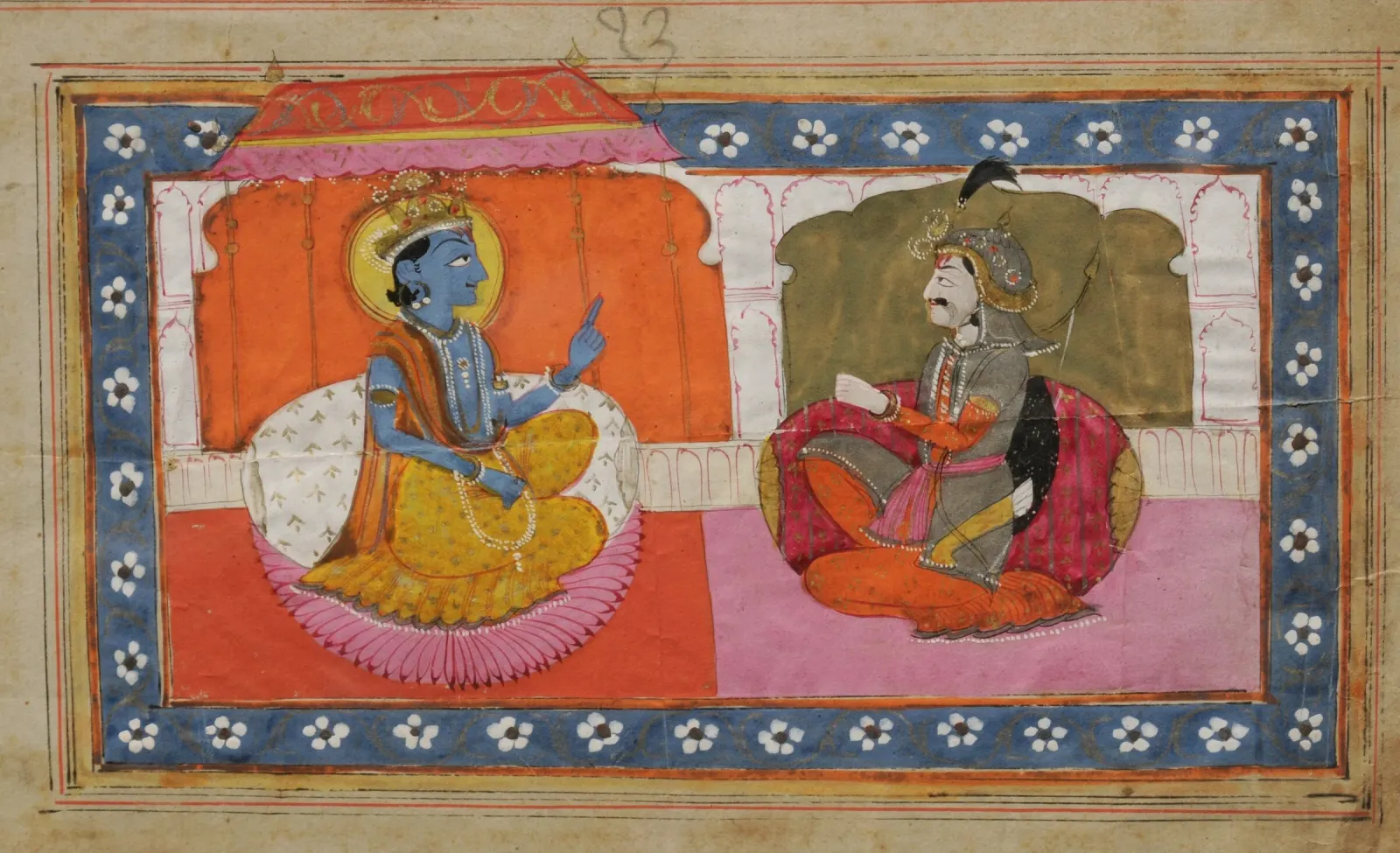
Short answer: The main message of the Bhagavad-gītā is this: you are an eternal soul, not the body BG 2.13; Kṛṣṇa is the Supreme Lord and the source of everything BG 7.7, BG 10.8; and the perfection of life is to always think of Him, serve Him with love and surrender to Him BG 18.65–BG 18.66. Śrīla Prabhupāda writes that devotional service to Kṛṣṇa "is the most confidential part of knowledge, and this is the essence of the whole Bhagavad-gītā" (purport to BG 18.66).
Where the Gītā begins: a confused hero
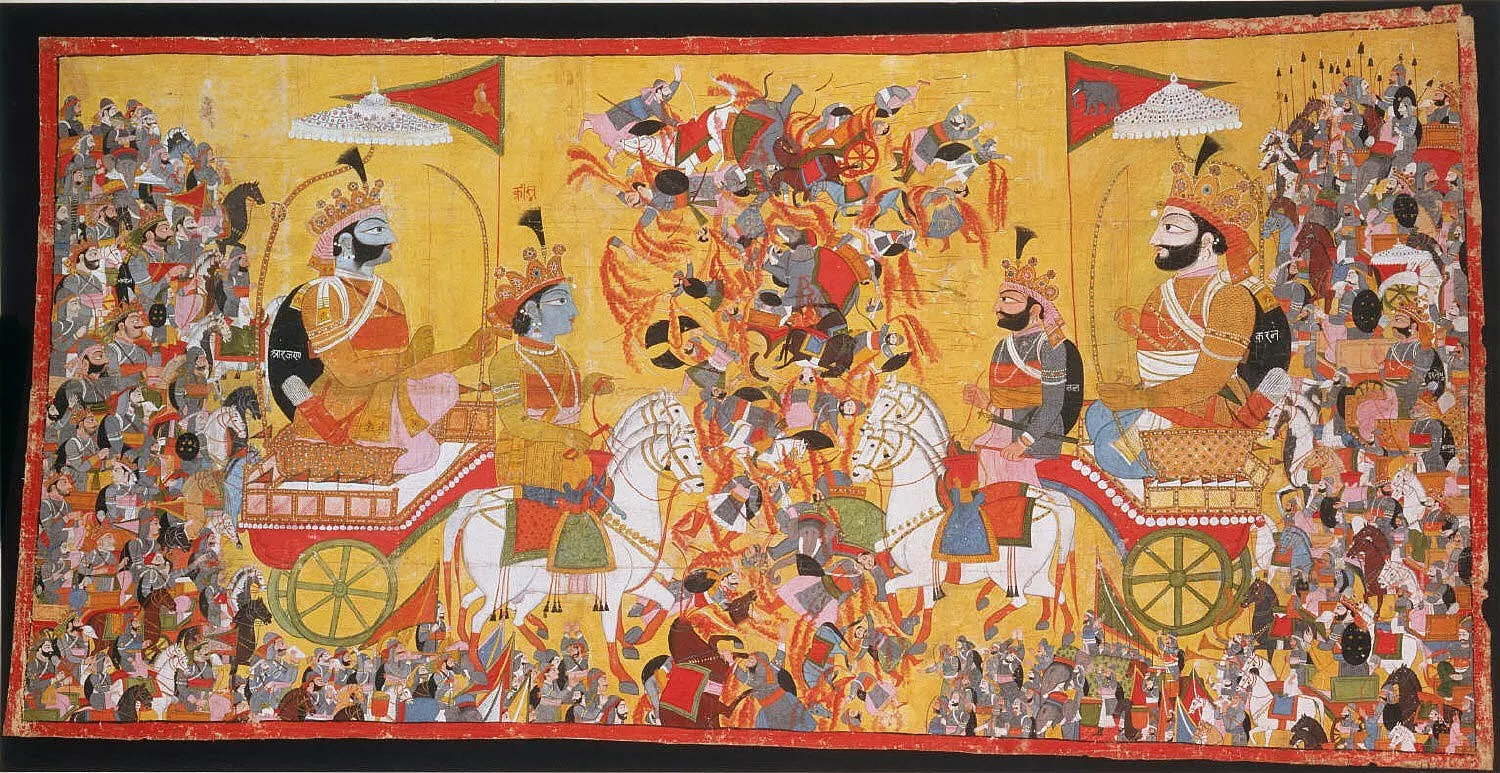
The Gītā is a conversation between Kṛṣṇa and Arjuna on the battlefield of Kurukṣetra. Arjuna sees his relatives and teachers on the other side and loses heart. He does not know what is right. So he does the wisest thing a confused person can do: he becomes Kṛṣṇa's student.
kārpaṇya-doṣopahata-svabhāvaḥ
pṛcchāmi tvāṁ dharma-sammūḍha-cetāḥ
yac chreyaḥ syān niścitaṁ brūhi tan me
śiṣyas te 'haṁ śādhi māṁ tvāṁ prapannam
Now I am confused about my duty and have lost all composure because of weakness. In this condition I am asking You to tell me clearly what is best for me. Now I am Your disciple, and a soul surrendered unto You. Please instruct me.
Śrīla Prabhupāda says Arjuna's problem is everyone's problem:
"They are like a forest fire that somehow blazes without being set by anyone. Similarly, the world situation is such that perplexities of life automatically appear, without our wanting such confusion."
— Śrīla Prabhupāda, purport to BG 2.7
Śrīla Prabhupāda then quotes the Garga Upaniṣad, which describes a person who never asks the real questions of life:
"He is a miserly man who does not solve the problems of life as a human and who thus quits this world like the cats and dogs, without understanding the science of self-realization."
— Garga Upaniṣad, quoted by Śrīla Prabhupāda in the purport to BG 2.7
Arjuna is not like that. He asks.
The rest of the Gītā is Kṛṣṇa's answer. It can be followed in six steps.
Step 1: You are not the body; you are the soul
Kṛṣṇa's first lesson is about our real identity.
dehino 'smin yathā dehe
kaumāraṁ yauvanaṁ jarā
tathā dehāntara-prāptir
dhīras tatra na muhyati
As the embodied soul continually passes, in this body, from boyhood to youth to old age, the soul similarly passes into another body at death. The self-realized soul is not bewildered by such a change.
The body changes from childhood to youth to old age, and at death it changes completely. The soul inside stays the same. The soul is never born and never dies BG 2.20. Kṛṣṇa also tells us whose part we are: every living being is His eternal, tiny part BG 15.7.
Śrīla Prabhupāda liked to explain this with the example of a bird in a cage:
""I am not this body. I am embodied within this body, encaged. But I am not this cage." Just like a bird is within the cage. The cage is not the bird. But foolish person, they are taking care of the cage, not of the bird. The bird, out of starvation, is suffering."
— Śrīla Prabhupāda, lecture on BG 2.13, London, 19 August 1973 (transcript)
Step 2: Kṛṣṇa is the Supreme Lord
The second lesson is about God.
mattaḥ parataraṁ nānyat
kiñcid asti dhanañjaya
mayi sarvam idaṁ protaṁ
sūtre maṇi-gaṇā iva
O conquerer of wealth [Arjuna], there is no Truth superior to Me. Everything rests upon Me, as pearls are strung on a thread.
Kṛṣṇa says He is the source of everything BG 10.8, the Lord in everyone's heart BG 15.15, and that He comes to this world in every age BG 4.7–BG 4.8. (See Who is Kṛṣṇa? for more.)
Step 3: Do your duty, but do it for Kṛṣṇa
The third lesson is about action. Arjuna wanted to run away. Kṛṣṇa told him to do his duty without attachment to the result BG 2.47, and to do it as an offering to the Lord:
yajñārthāt karmaṇo 'nyatra
loko 'yaṁ karma-bandhanaḥ
tad-arthaṁ karma kaunteya
mukta-saṅgaḥ samācara
Work done as a sacrifice for Viṣṇu has to be performed, otherwise work binds one to this material world. Therefore, O son of Kuntī, perform your prescribed duties for His satisfaction, and in that way you will always remain unattached and free from bondage.
This is karma yoga. (See What is karma yoga?)
Step 4: Learn from one who knows
The fourth lesson is about how to learn. Spiritual truth is not made up by our own guessing; it is received.
tad viddhi praṇipātena
paripraśnena sevayā
upadekṣyanti te jñānaṁ
jñāninas tattva-darśinaḥ
Just try to learn the truth by approaching a spiritual master. Inquire from him submissively and render service unto him. The self-realized soul can impart knowledge unto you because he has seen the truth.
The Gītā itself came down this way. Kṛṣṇa says He first taught it to the sun-god Vivasvān, who taught Manu, who taught Ikṣvāku BG 4.1.
"The Gītā is not, therefore, a speculative treatise for the insignificant mundane scholar but is a standard book of knowledge coming down from time immemorial."
— Śrīla Prabhupāda, purport to BG 4.1
Step 5: Think of Kṛṣṇa and serve Him with love
After teaching many paths, Kṛṣṇa says what He wants most:
man-manā bhava mad-bhakto
mad-yājī māṁ namaskuru
mām evaiṣyasi yuktvaivam
ātmānaṁ mat-parāyaṇaḥ
Engage your mind always in thinking of Me, offer obeisances and worship Me. Being completely absorbed in Me, surely you will come to Me.
man-manā bhava mad-bhakto
mad-yājī māṁ namaskuru
mām evaiṣyasi satyaṁ te
pratijāne priyo 'si me
Always think of Me and become My devotee. Worship Me and offer your homage unto Me. Thus you will come to Me without fail. I promise you this because you are My very dear friend.
"Life should be so molded that one will always have the chance to think of Kṛṣṇa."
— Śrīla Prabhupāda, purport to BG 18.65
Śrīla Prabhupāda explained in a lecture that this is our real duty once we know we are not the body:
"So the intelligent man who is not crazy, he should understand that "I am not this body." First thing. "I am not this body." Then he'll understand that what is his duty. Oh, as spirit soul, what is his duty? His duty is, that is stated in this Bhagavad-gītā in the last verse of the Ninth Chapter, that duty is man-manā bhava."
— Śrīla Prabhupāda, lecture on BG 9.34, New York, 26 December 1966 (transcript)
This is bhakti yoga. (See What is bhakti yoga?)
Step 6: Surrender to Kṛṣṇa, and do not fear
The last instruction of the Gītā sums up everything:
sarva-dharmān parityajya
mām ekaṁ śaraṇaṁ vraja
ahaṁ tvāṁ sarva-pāpebhyo
mokṣayiṣyāmi mā śucaḥ
Abandon all varieties of religion and just surrender unto Me. I shall deliver you from all sinful reaction. Do not fear.
"Now, in summarizing Bhagavad-gītā, the Lord says that Arjuna should give up all the processes that have been explained to him; he should simply surrender to Kṛṣṇa. That surrender will save him from all kinds of sinful reactions, for the Lord personally promises to protect him."
— Śrīla Prabhupāda, purport to BG 18.66
"The particular words used here, mā śucaḥ, "Don't fear, don't hesitate, don't worry," are very significant."
— Śrīla Prabhupāda, purport to BG 18.66
In a 1966 lecture Śrīla Prabhupāda put it this way:
""You give up. Because you are My very confidential friend, therefore I say unto you that you don't bother with anything else. Just surrender unto Me." This is the most confidential. So in all points of view, if you make an analytical study of the Vedic literature, the ultimate summit knowledge is to surrender unto Kṛṣṇa."
— Śrīla Prabhupāda, lecture on BG 4.34, New York, 12 August 1966 (transcript)
The six steps at a glance
| Step | The teaching | Key verse |
|---|---|---|
| 1 | I am an eternal soul, not this body | BG 2.13 |
| 2 | Kṛṣṇa is the Supreme Lord, the source of all | BG 7.7 |
| 3 | Do your duty as an offering to Him | BG 3.9 |
| 4 | Learn from a self-realised teacher | BG 4.34 |
| 5 | Always think of Him and serve Him with love | BG 18.65 |
| 6 | Surrender to Him; He will protect you | BG 18.66 |
How the Gītā ends: Arjuna's confusion is gone
At the start Arjuna was confused and would not fight. At the end he says his illusion is gone and he is ready to act on Kṛṣṇa's words.
arjuna uvāca
naṣṭo mohaḥ smṛtir labdhā
tvat-prasādān mayācyuta
sthito 'smi gata-sandehaḥ
kariṣye vacanaṁ tava
Arjuna said, My dear Kṛṣṇa, O infallible one, my illusion is now gone. I have regained my memory by Your mercy, and I am now firm and free from doubt and am prepared to act according to Your instructions.
"So to study Bhagavad-gītā is to understand Kṛṣṇa factually. When a person is in full knowledge, he naturally surrenders to Kṛṣṇa."
— Śrīla Prabhupāda, purport to BG 18.73
How to live the Gītā's message
- Remember who you are. When the body is tired, sick or ageing, remember you are the soul BG 2.13.
- Keep Kṛṣṇa in the centre. Offer your work, food and plans to Him BG 3.9, BG 9.27.
- Read the Gītā regularly, with a guide. Read the purports and hear from those who live by it BG 4.34.
- Chant and remember. Think of Kṛṣṇa through the day BG 18.65.
- When afraid, take shelter. "Do not fear," Kṛṣṇa says BG 18.66.
Frequently asked questions
What is the main message of the Bhagavad-gītā in one line?
Know that you are an eternal soul, know Kṛṣṇa as the Supreme Lord, and serve Him with love and surrender (2.13, 7.7, 18.65–66).
What is the most important verse of the Bhagavad-gītā?
Śrīla Prabhupāda explains that in 18.66 the Lord is summarizing the Bhagavad-gītā: Arjuna should give up all other processes and simply surrender to Kṛṣṇa (purport to 18.66). Verse 18.65 and 9.34 give the same message in positive terms: always think of Me and become My devotee.
Who spoke the Bhagavad-gītā, to whom, and when?
Lord Kṛṣṇa spoke it to Arjuna on the battlefield of Kurukṣetra. Kṛṣṇa says He had taught the same science long before to the sun-god Vivasvān (4.1), and Śrīla Prabhupāda explains that it was respoken to Arjuna about five thousand years ago (purport to 4.1).
How many chapters and verses are in the Bhagavad-gītā?
The Bhagavad-gītā has 18 chapters and 700 verses.
Is the Gītā only for Hindus?
The Gītā speaks about the soul, and every living being is a soul, an eternal part of Kṛṣṇa (15.7). Its teaching about the self, God and action is meant for every human being.
How should a beginner start reading the Gītā?
Start with Chapter 2, which explains the soul, and read each verse with its purport. A reading plan can help you keep going.
Read next
Verses cited
BG 2.13BG 7.7BG 10.8BG 18.65BG 18.66BG 2.7BG 2.20BG 15.7BG 15.15BG 4.7BG 4.8BG 2.47BG 3.9BG 4.34BG 4.1BG 9.34BG 18.73BG 9.27